
Inspiring Women Breaking Barriers and Making Science Accessible
International Day of Women and Girls in Science 2026
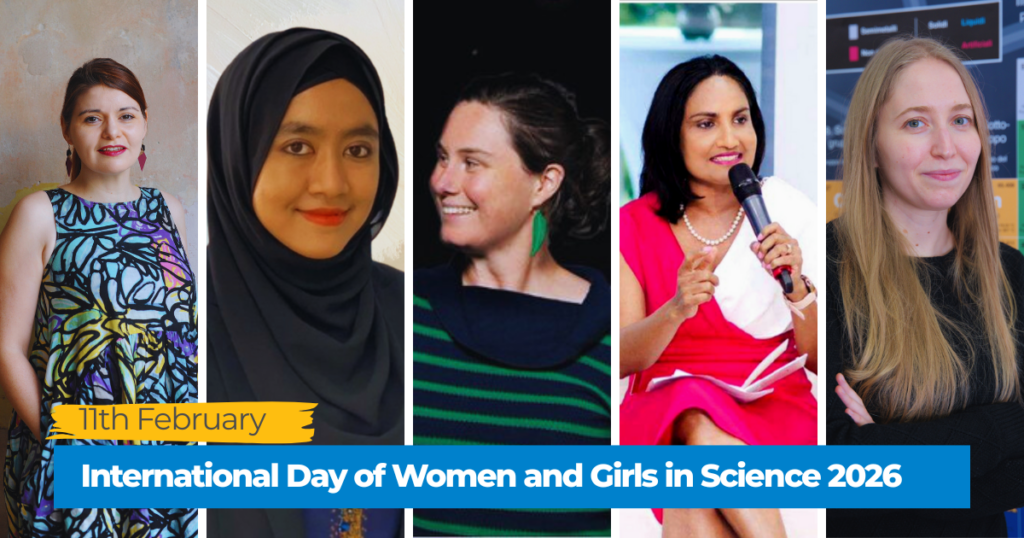
Women continue to represent less than one-third of the world’s researchers, according to a UNESCO study in 2025. Closing the gender gap matters not only for fairness but also for the quality, diversity, relevance, and impact of science, technology, and innovation.
The 2026 International Day for Women and Girls in Science focuses on showcasing good practices and solutions to build more inclusive Science, Technology, Engineering, and Mathematics (STEM) ecosystems.
We spoke with some inspiring women in our community, and in this blog, we recognise and share their work and passion for science. We highlight their most recent projects, activities, achievements, and the impact of their contributions on society and the next generations.
Claire Murray
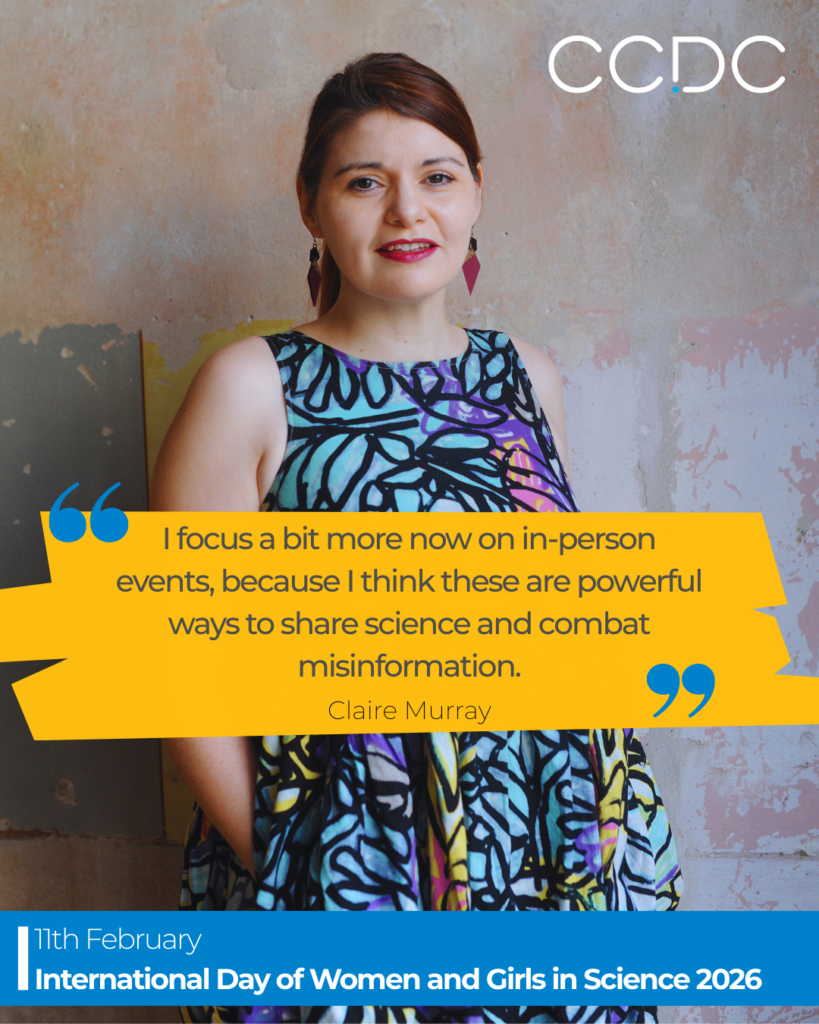
Based in Berlin, Claire Murray is an independent researcher who has engaged with over 100,000 people worldwide through public talks, interactive programs, project evaluations, and diverse science communication initiatives. She is a chemical crystallographer, and her research interests currently focus on calcium carbonate. Claire and co-authors published some results in CrystEngComm from a project involving 1,000 secondary students who produced samples of calcium carbonate.
In 2025, she joined an expert panel hosted by CCDC discussing how technological advances are reshaping science career paths. Watch the recording here.
Claire’s work in chemistry, citizen science, and science education has earned recognition from both the Royal Society of Chemistry and the European Crystallographic Association. She has been working with the University of Galway (IE), the Rosalind Franklin Institute (UK), the Ethnologische Museum Berlin (DE), the Oslo Metropolitan University (NO), the University of Oxford (UK), and the European Citizen Science Association (DE).
Claire Murray’s work in science communication and citizen science includes projects such as Project M, SEEDS, YouCount, ROAM, Caomhnú, and Breaking Chemical Bias research. She has developed a hands-on crystallography activity using marshmallows and cocktail sticks to help people understand crystal structures. Created in collaboration with the British Crystallographic Association, this accessible teaching method reached over 60,000 people across the UK, Ireland, Australia, and Germany.
Claire also led the team that created Diamond: The Game. It’s a board game about scientific careers and the life of a scientist, based on the Diamond Light Source synchrotron, which has been directly distributed to 100 schools across the UK through a successful STFC Spark Award.
In her own words, Claire believes she has “been lucky enough to explore quite a few different methods. You should explore whatever methods interest you because your enthusiasm comes through when you do. I have friends who have combined their interest in science with their interest in music, knitting, painting and fashion (to name a few). I’ve even made science-themed cakes for friends’ birthdays!”
Claire is the lead citizen science consultant on the Impetus-CS Horizon-funded project, which conserves stories of climate change and climate action through citizen science. This project aims to catalyse structural changes and empower rural Irish communities towards environmental justice.
“I started sharing my work by visiting schools, and then tried out social media. I focus a bit more now on in-person events, because I think these are powerful ways to share science and combat misinformation.”
Claire considers that “science provides crucial information that drives our world and the decisions we make” and encourages “all scientists to share their knowledge so we can all live in a better and safer world”.
Marta Morana
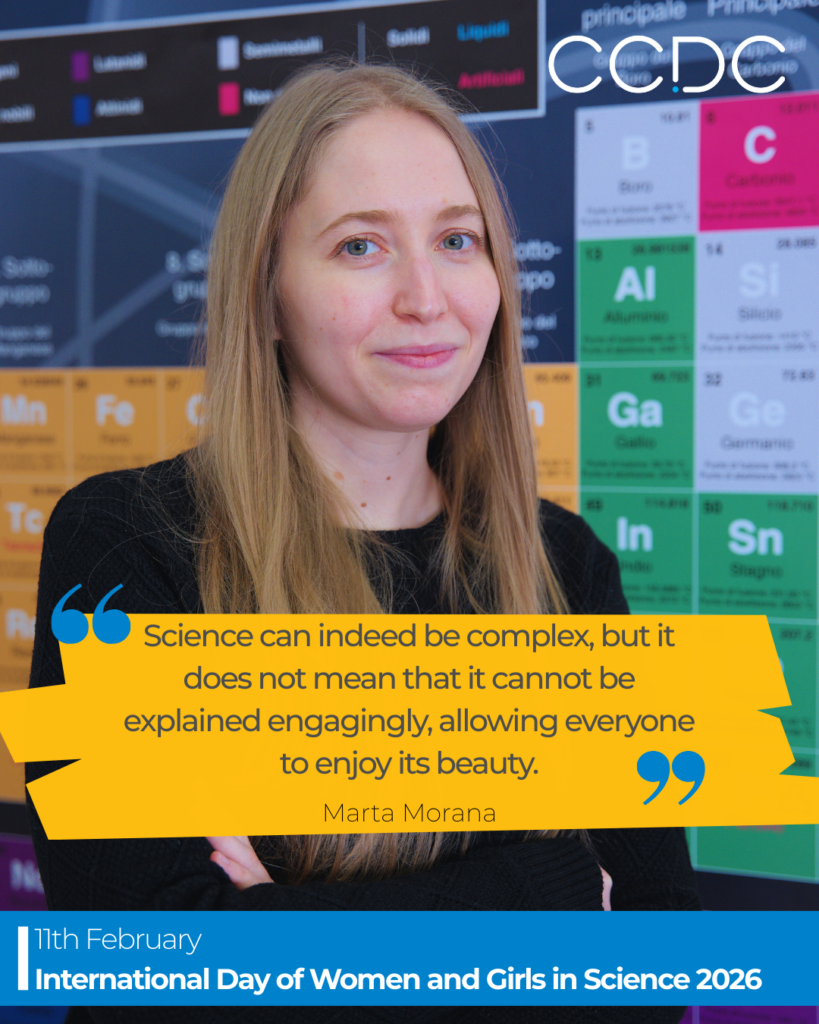
Marta Morana is a researcher at the University of Florence, Italy, specialising in crystallography, crystal chemistry, and solid-state chemistry. Her research focuses on the structural characterisation of minerals and synthetic analogues at both the average and local structure scale. She is particularly interested in how crystals behave at non-ambient conditions, such as high pressure and variable temperatures. Her primary project involves characterising mineral inclusions, particularly iron oxides, found in cratonic diamonds of uncertain origin.
Marta won the first George M. Sheldrick Prize of the European Crystallographic Association, back in 2024, in recognition of “her highly successful and creative research in diverse fields of crystallography ranging from structural biology to mineralogy and functional materials”.
Currently, she is co-chair of the European Young Crystallographers group (GIG01) within the European Crystallographic Association (ECA). Together with Mateja Pisačić and Helena Butkiewicz, they organise a satellite meeting before each European Crystallographic Meeting to provide early-career scientists a friendly space to practise their presentation skills. They also organise a Mixer for informal networking and a Science Slam, where participants give short and creative presentations of their work: “Successful Science Slam presentations have featured pancakes, cats, and even singing!” They additionally organise a series of monthly free webinars covering different fields and topics within the ECA.
Recently, Marta and the team launched a mentoring program called GEMS, supported by the Senior Crystallographers (GIG02) and Education in Crystallography (GIG03) groups. “GEMS aims to provide guidance and support to ECA members facing career-related issues, primarily, but not exclusively, early-career researchers.”
Marta has actively participated in various initiatives promoting structural science within the Italian Association of Crystallography and the European Crystallographic Association, and she also often gives lectures on minerals and crystals in high schools, combining them with guided tours of the mineralogy section of the Natural History Museum in her hometown of Florence.
A few years ago, she joined two projects with the Italian Young Crystallographers group (GCI), funded by the Italian Crystallographic Association (AIC). These projects produced a series of interviews in which expert crystallographers gave brief and simple explanations of a complex crystallographic topic. They shared their experience, advised and inspired younger people.
Marta and her friend and colleague, Giorgia Confalonieri, are now busy developing a board game about crystallography, which has been tested with high school students. She aims to produce a print-and-play version both in Italian and English, freely available on the AIC website. Marta strongly believes that “gamification is really a powerful tool to engage people; I was pleasantly surprised to hear a high school student complaining to a classmate for not paying enough attention to the lecture!”
“Science sometimes feels more complex than it actually is, and scientists are portrayed as strange, nerdy people, usually as old, white men. Science can indeed be complex, but it does not mean that it cannot be explained engagingly, allowing everyone to enjoy its beauty.”
Helen Maynard-Casely
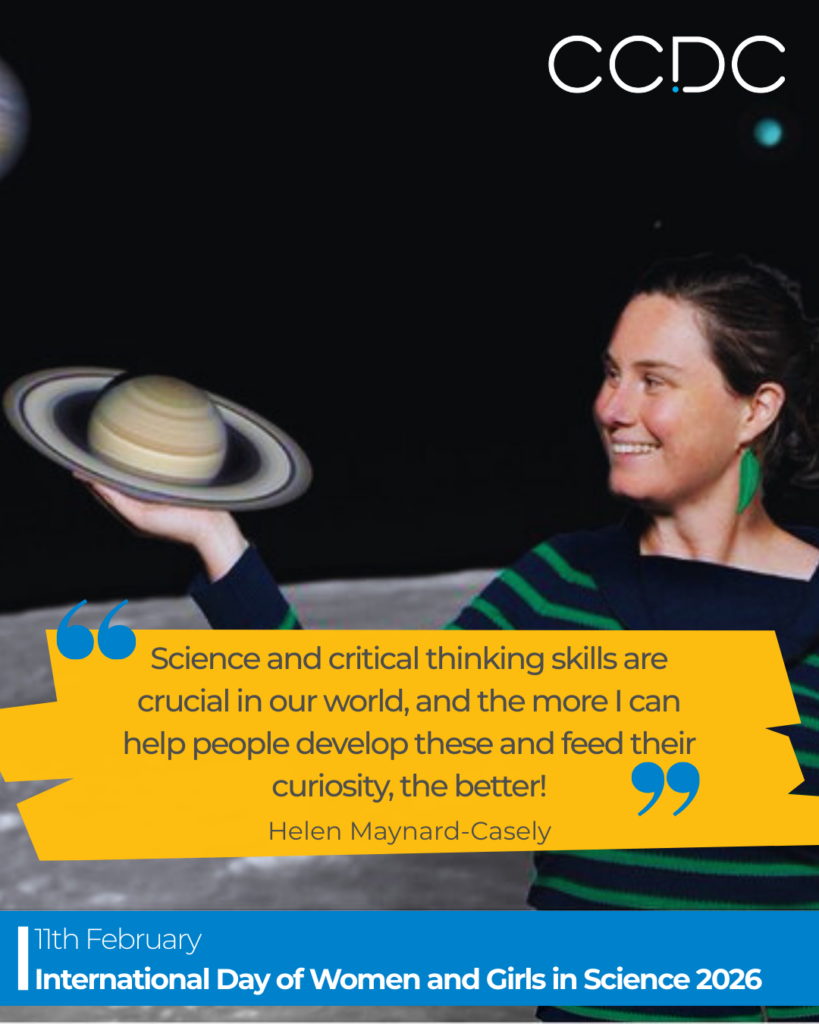
Helen Maynard-Casely works as a Senior Instrument Scientist at the Australian Centre for Neutron Scattering, ANSTO, and her research focuses on the structures of materials relevant to the dwarf planets of our solar system. “I study minerals, but not quite the minerals that most people expect. The ones that I’m interested in are usually gases and liquid at Earth conditions, but in the cold conditions of the outer solar system, these are the materials that shape the surfaces of worlds like Titan and Europa.” In 2023, Helen brought her enthusiasm to the CSD Champions network, committing to engage with and support students in her region by helping them use CSD data and software in their research.
Passionate about promoting crystallography and science to the widest possible audience, in 2014, the International Year of Crystallography, Helen coordinated the Crystallography365 project, which aimed to publish a crystal structure article daily throughout the year. She served as the 2019 Australian Institute of Physics ‘Women in Physics’ Lecturer and published her first children’s book, I Heart Pluto, in 2020. She also writes frequently for magazines.
Another of Helen’s passions is visiting schools to speak directly with students and “to think up activities that can be run in classrooms and build on what the students are already learning”.
The repeating patterns of atoms and molecules in crystals attract scientists and the public alike. Fascinated by crystals and their patterns, and inspired by Australian crystallography pioneer Lawrence Bragg, Helen and other scientists from Australia and New Zealand created the project BraggYourPattern. With this project, they aim to create educational resources about crystallography. They have distributed free Crystal Explorer Kits to Australian primary schools. Previously, they organised Crystal-A-Con, a free two-day science festival at the 2023 International Union of Crystallography conference in Melbourne, which attracted over 400 students and families.
“My motto (borrowed from William L Bragg) when communicating science is ‘Don’t tell them the science, show them!’ – as much as I can.” Therefore, she always tries to have hands-on activities that people can discover things for themselves. “What I’ve discovered through doing this is that people do interpret things in very different ways – but that is always a learning experience for me and can really help me work on future explanations for my work.”
Helen is a government-funded researcher, and she believes that “science and critical thinking skills are crucial in our world, and the more I can help people develop these and feed their curiosity, the better!”
Siti Syaida Sirat
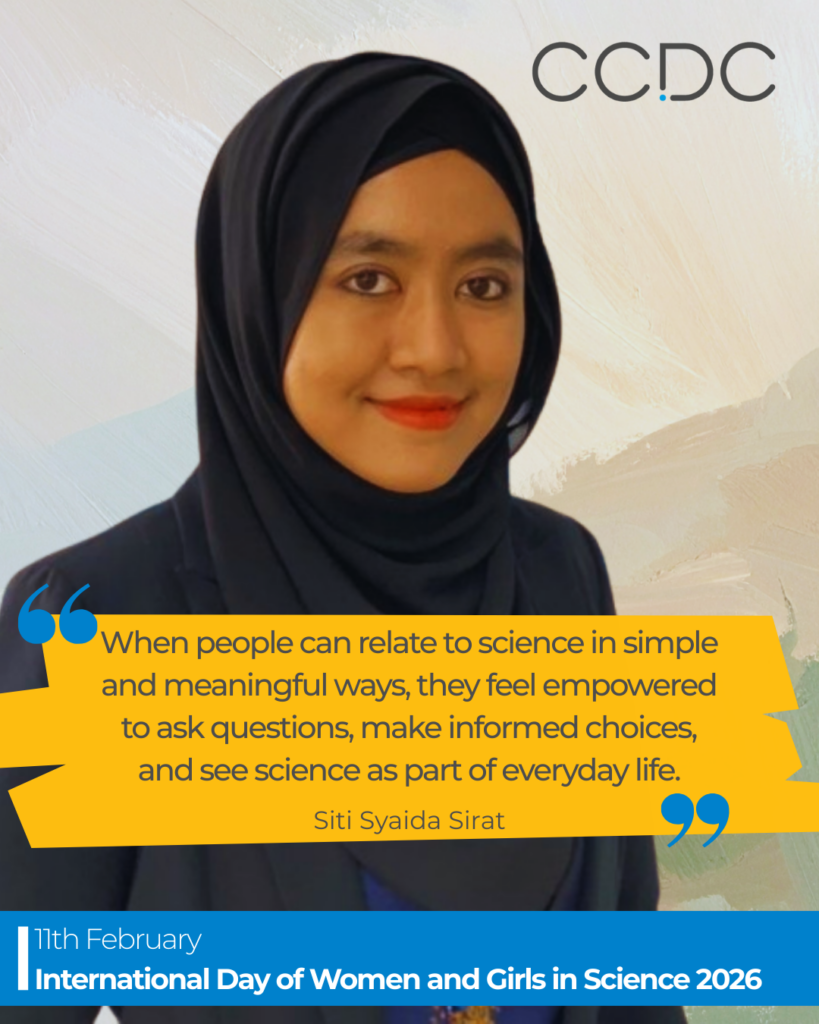
Siti Syaida Sirat is a Senior Lecturer at Universiti Teknologi MARA, Malaysia, and an Associate Fellow at the Atta-ur-Rahman Institute for Natural Product Discovery (AuRIns). Her research focuses on synthesising new metal carbonyl clusters and investigating their chemical reactivity. She employs single-crystal X-ray diffraction to elucidate their molecular structures, where some compounds exhibit unique and unexpected structural features that provide insight into metal-metal bonding and structure-property relationships. But she never forgets her passion for “sharing science with wider communities through outreach and creative tools such as digital comics. I hope to inspire others to love, explore, and feel confident about science”.
Syaida enjoys finding creative ways to communicate science beyond the laboratory and often uses digital comics to turn complex ideas into simple, engaging stories with relatable characters, helping people feel more comfortable with topics like crystallography. One example is Crystal Buddies: Exploring the Magic of Crystals, a digital comic developed with CCDC’s support through an Engagement Grant. This project aims to introduce crystallography concepts through friendly characters and visual storytelling. “Together with interactive posters and clear visuals, this approach sparks curiosity, builds confidence, and allows learners from different backgrounds around the world to connect with science.”
Syaida believes research should also reach beyond academic circles. Therefore, she works hard to share her work through science outreach programmes, particularly with school communities. By engaging students in hands-on activities such as crystal candy experiments, she connects everyday experiences to crystallography concepts, making complex science accessible, meaningful, and inspiring.
“Communicating science to the public is important because it helps build understanding, trust, and curiosity. When people can relate to science in simple and meaningful ways, they feel empowered to ask questions, make informed choices, and see science as part of everyday life, not something distant or intimidating”.
Marvadeen Singh-Wilmot
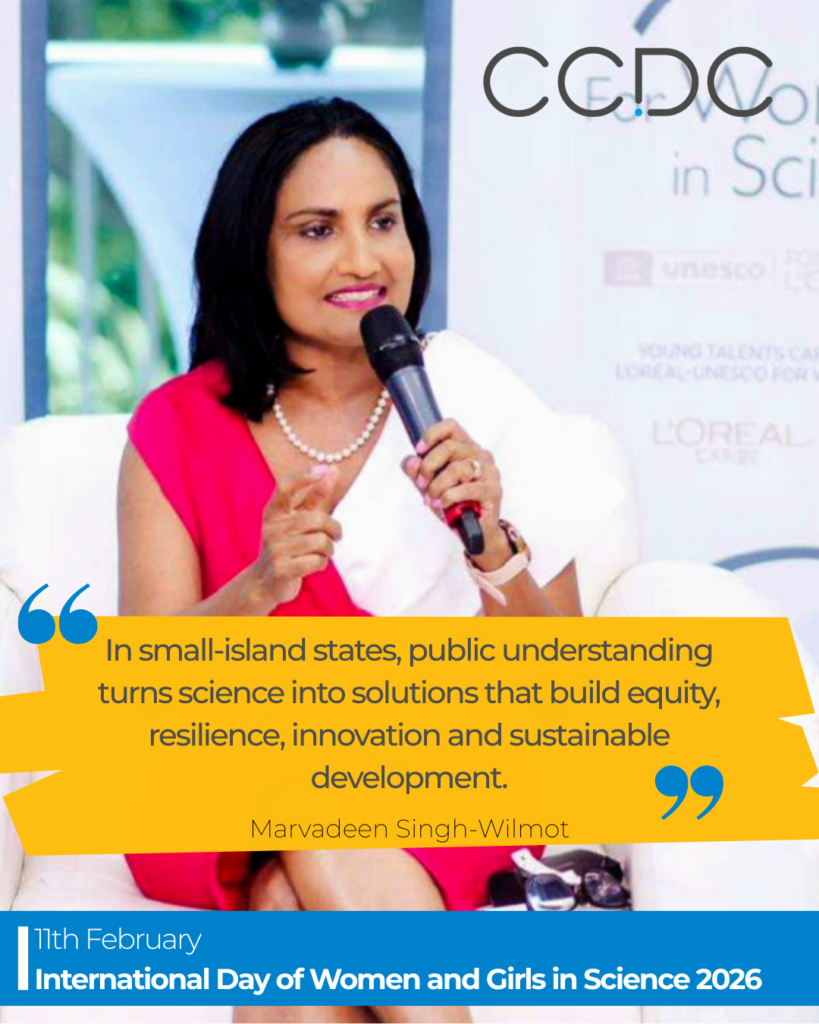
Marvadeen Singh-Wilmot is a professor at the University of the West Indies (UWI) in Jamaica. Her research in lanthanide metal organic framework (Ln-MOF) materials explores their synthesis, structural characterisation, and applications in sensing and storage. She uses X-ray crystallography to probe structure-function relationships of MOFs. She also works tirelessly at the nexus of equity, diversity, inclusion, science capacity building, and science diplomacy. Since 2025, Marvadeen has also been a CSD Champion in her region, helping us promote the benefits of using the CSD in scientific research and education.
“My love and passion for science coupled with my core belief that the mission of science is to make people’s lives better, therefore drives me to share and connect all whom I interact with to science, its method and its mission.”
Through the Walking in Her/His Footsteps STEM Mentorship Programme and the EM² Project (Empowerment through Mentorship and Mathematics), Marvadeen designs and leads island-wide mathematics and chemistry teacher workshops, student mentorship programmes, Special Mathematics Olympiads for deaf and visually-impaired students, STEM tours, and community-embedded learning activities that connect abstract scientific concepts to everyday Caribbean contexts.
Marvadeen also develops crystallography capacity-building interventions through the Caribbean Regional X-ray Science toward Advancement Laboratory (crXstal) and the Caribbean Crystallography School, where participants train directly on X-ray diffraction instrumentation, analyse crystals that they grow during the school or bring from their labs, and interact with international experts through public-facing lectures and demonstrations.
Each year, Marvadeen funds undergraduate researchers in her lab and has engaged them in projects to grow single crystals of metal-organic frameworks and study structure-function relationships. In the past, she designed and operated a Saturday science programme called ‘LabRats‘ for young children at the primary school level. “This was a way for them to learn science through play, develop observation skills, explore the world by experimenting and yes, make a mess since mess is fun”.
Across all of these initiatives, Marvadeen deliberately explains advanced research in simple language, visual models and hands-on activities, based on her own experiences as a student at the UWI who faced similar challenges to today’s students. Challenges include limited resources for both research and personal expenses, loss of loved ones at an early age, and climate disasters. Marvadeen believes that it is her role to inspire students and give them confidence that everyone can excel in science.
“Allowing people to see that those who are engaged in a profession enjoy, understand and believe in its transformative power, is a very important and effective method of bringing people to any subject area, i.e., making it more “accessible”.
Marvadeen is an enthusiastic scientist who promotes scientific research as a public benefit for all and connects laboratories to classrooms, national education systems, policy conversations and regional development through sustained outreach, training and media engagement. She brings her research-based programmes into schools and communities across Jamaica and the Caribbean, helping teachers, students, parents and local leaders engage with new scientific ideas. Beyond direct engagement activities, Marvadeen communicates through newspapers and magazines, publishing accessible articles on topics such as synchrotrons, crystallography and gender equity in science for policymakers and the wider public. She also conceptualised and hosted a television programme on UWI TV, ‘Science in Action‘, where Marvadeen interviewed Jamaican scientists to share their research and career journeys in language designed for non-specialist audiences, helping to humanise science and inspire the next generation.
“I believe science communication is vital because my work building research infrastructure, leading teacher-training programmes and responding to disaster disruption has shown that discovery only benefits society when communities, educators and policymakers understand it. In small-island states, public understanding turns science into solutions that build equity, resilience, innovation and sustainable development.”